Draft Strategy: Tips & Tricks
Discover 7 expert-level drafting tips.
Plus 3 fatal mistakes you must avoid.
Round-by-Round Draft Guide
Top targets & alternate picks for each round.
Based on the latest rankings & ADP data.
Advanced Draft Strategy
7 key strategies for tailored player rankings.
Live-draft sync strategizes while you draft.
1. Use Unique Rankings To Give Yourself an Edge
Many of your competitors will be drafting off of the same rankings (think: ESPN or Yahoo). Tough to get an edge that way. Put in the work. Stay up-to-date on the news. And don’t be afraid to break away from the herd when it comes to your rankings. It’s an easy way to out-draft your competition.
2. Weaponize ADP To Outsmart Your Competition
ADP is like having your opponent’s playbook. Whether subconsciously or not, ADP has a huge influence on draft behavior. Drafters rarely stray too far from it. Knowing which players your opponents are likely (and unlikely) to draft next can give you a big strategic advantage. (Hint: Use our ADP Market Index to help.)
3. Catch League-Winning Breakout Candidates
Leagues are won by nailing one or two breakout late-round picks. Think Drake Maye or Harold Fannin last year. When you’re on the clock and deciding between two or more players, always ask yourself: “Which of these guys is more likely to be the league-winning, had-to-have player?” Then take that guy.
4. Learn to Predict Your Opponents’ Picks
Drafting is part science (rankings, ADP, positional value) and part art. No two drafts will play out same. It’s your job to recognize the flow of your draft and react accordingly. It’s especially important to track positional needs. For example, if teams near you have selected a bunch of WRs but few RBs, you can assume they’ll be targeting RBs soon. Get out ahead of them and snag a RB with your next pick.
5. Discover the Next Rico Dowdle
Let your league mates waste later-round picks on handcuffing their own RBs. You can get the jump on them by targeting RBs behind fragile starters. That was Rico Dowdle and Woody Marks this time last year. And we’re eyeing some intriguing new candidates for 2026.
6. Draft Immobile QBs in 2026 (Wait … What?!)
Running QBs are fantasy gold. Problem is, that’s no longer a secret. In many cases, the pendulum has swung too far toward those guys. And that’s turned some less-mobile QBs into values. Matt Stafford was a prime example last year. Heading into 2026, Trevor Lawrence and Brock Purdy pop as undervalued QBs -- despite not being elite runners.
7. Chase opportunity at RB… and talent at WR
Fantasy scoring at RB is closely tied to playing time and touches. Target RBs who project to get the rock a lot. WR is a more talent-driven position. Targets are earned, not given. That’s why advanced metrics like targets per route and yards per route run should be key factors in your WR rankings.
1. Don't Match Your Rankings To Last Year’s Stats (Consider What's Changed)
Overweighing last year's fantasy finishes could cost you on draft day. Too much changes from year to year. That includes coaching staffs, offensive schemes, rookies, free agents, etc. That’s why it’s crucial that you live in the present and weigh all the offseason changes when creating your 2026 player rankings.
2. Don’t Be Stubborn About Your Pre-Draft Plan
Instead, be flexible. You might go in with a Zero-RB strategy. But if enough teams grab WRs by the second round, a workhorse RB might fall into your lap. That’s when it’s time to scoop up the player who will best help your team win … not reach for a position because it was part of your pre-draft plan.
3. Don’t Pass Up Player Value to Chase Positional ‘Need’
NFL teams that try to fill “needs” (instead of going “best player available”) most often crap out on their draft picks. Same holds true for you. Reaching for a “need” player most often blows your chances at winning. And remember: Drafting the best player available gives you a valuable trade chip down the road.
The most advanced fantasy football draft strategy for any format, and any league, is a “Value Based Draft Strategy.” It can take different forms, and be based on any number of draft-value indicators.
Draft Sharks' value-based draft strategy actually has 17 Draft Value Indicators. Here are 7 crucial ones you can use in your draft:
1. Master Cross Positional Value
Which positions are most valuable in your league? It's QB in superflex ... but not in 1-QB leagues. How do RBs stack up vs. WRs in PPR vs. half-PPR? Understanding values across positions involves using a specific algorithm to analyze player values. It weighs various factors like scoring rules, starting-lineup requirements, ADP, and league settings.
2. Track Positional Scarcity on the Fly
This one is super important but also super hard. To measure positional scarcity, you need to track each pick -- and calculate how it impacts the player pool. If there are seven QBs taken by the fifth round, that position becomes scarce. And QBs suddenly increase in value in your draft.
3. Prioritize Players With Greater Upside
You’re in the 11th round and torn between three players with roughly the same draft value. You need to highlight the player with the highest fantasy ceiling. Then make sure he doesn't slip by you in the heat of the draft. It might sound simple, but it’s mission-critical to identify these breakout players and pull the trigger when the time is right.
4. Look Out for “Bust” Red Flags
You probably know the red flags of a potential bust. But are you factoring them into your value of each player? Age, declining production, bad offensive line, competition for touches, a new offensive scheme that de-emphasizes a player’s role. Don’t blow your draft capital on a player who is screaming “bust!”
5. Get Scientific Injury Risk Assessments
You know the scenario… You spend a second-round pick on a stud WR -- and in Week 2, he suffers a soft-tissue injury and misses the next four weeks. Brutal. Injuries aren’t 100% predictable. But you can get reliable scientific data to avoid the biggest potential injury risk players.
6. Use Correlated ADP
This one is huge. Using ADP (Average Draft Position) is the ultimate measure to find value. The problem is this: If you use redraft PPR ADP to prepare for your half-PPR best ball league, you’re doing yourself more harm than good. Find reliable ADP that is correlated to your specific rules and format.
7. Avoid Bye-Week Conflicts
You’d think this one would be so easy. But you know the truth. You’re in the heat of your draft, you’re on the clock, and bang … you double-up on the same bye week at a crucial position. You’re now forced to fix that mistake at some point in your draft – or later in your season.
Key Insight: There are a lot of factors that go into drafting for true player value. It’s not just about using “position tiers” or employing a “Zero” or “Hero” RB strategy. It’s about using a mix of scientific metrics and educated guesses in predicting player production. And how you and your opponents behave during critical times in your draft.
How To Execute This Strategy: You’ve got a lot to focus on if you want to execute these draft strategies in real-time – amid the chaos of your draft. In fact, it’s humanly impossible for anyone to implement every key strategy… AND work out every algorithm essential to a winning draft.
The real solution is to get real-time help from an AI “Draft War Room.”
If what you’ve read so far makes sense, here’s a draft tool you need to learn more about.
It’s actually TWO tools that pair together so you can dominate your draft with one super tool!
A live-draft sync super-powered by the “Draft War Room” (DWR)
This super draft tool automatically re-ranks players on your draft board in real-time. Those dynamic player values are based on a variety of factors, including positional scarcity, team needs, injury risk, breakout potential, and bust risk. In fact, there are 17 draft-value indicators it calculates in real-time to come up with your player suggestions.
How It Works: You're just a few clicks away from your league and draft being live-synced. From there, you’re on the road to draft domination. And it works across multiple platforms (ESPN, Yahoo, CBS, Underdog, and Sleeper, to name a few). For multiple league formats (dynasty, rookie, keeper, best ball, auction, superflex – and, of course, redraft).
What It Means For You: You get dynamic player values customized to your league. Simply. And in real-time. When it's your turn to pick, the Draft War Room offers instant player suggestions tailored to everything happening in your draft. You’ll be unburdened from the pressure of being "on the clock." While at the same time getting specific player suggestions that are scientifically based and strategically sound.
Key Insights: If you're serious about winning your fantasy league, you can’t rely on 2016 tools in 2026. It’s really that simple. We know too much about the science behind successful drafting to keep basing decisions on “gut” and “educated guesses.” And we need to have a lot more technology at our disposal to be consistent fantasy football champions.
How to Execute This Strategy: Make sure you pick a “live-draft sync” over a simple “league sync.” A league sync doesn't work during your draft to adjust player values in real-time. To learn more about the live-draft sync option, check out this page explaining our live-sync tool.
Fantasy drafts demand precision. Every pick forces you to juggle ...
All while the clock is ticking.
Get it wrong, and your season can unravel before it even starts.
And let’s be honest: Nothing stings more than watching your early picks bust while your league mate hits on the breakouts that carry him to a title.
Your solution: A round-by-round draft strategy guide to maximize value with every pick.
This 12-team PPR draft strategy guide highlights top targets and fallback options for every pick of your draft.
We’ve baked in our 3D Values alongside the latest ADP to help you zero in on the best choices each round.
Consider this your game plan heading into your draft.
No fantasy football draft goes exactly as planned, of course. You’ll likely need to adjust your strategy throughout the draft to maximize value.
That’s where the dynamic fantasy football cheat sheet on your Draft War Room comes into play, instantly analyzing 17 value indicators each time you’re on the clock to help you make the best pick.
Combine the Draft War Room with this round-by-round game plan and you’ll be armed with the ultimate fantasy football draft guide.
Note: This strategy guide assumes a 16-round draft and starting lineup of 1 QB, 2 RBs, 2 WRs, 1 TE, 1 Flex, 1 K and 1 DST. The Draft War Room will help you adjust your strategy if your league settings are different.
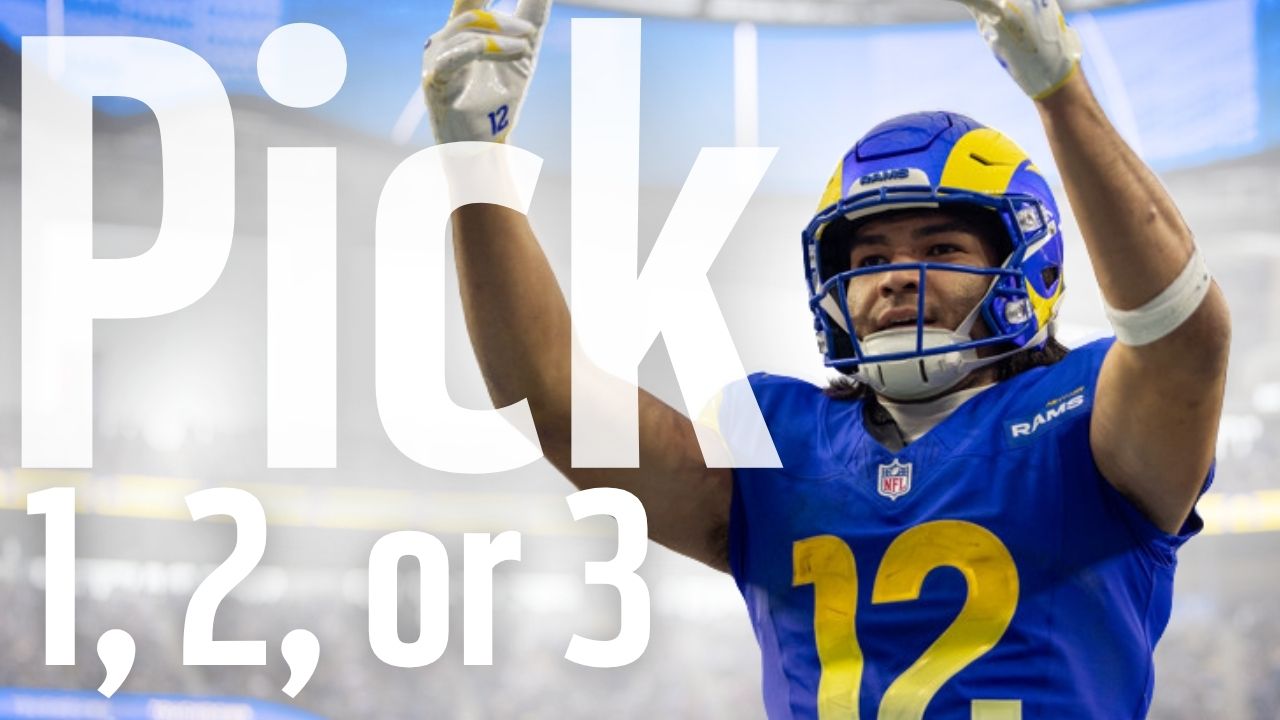
It’s a tight race atop the 2026 fantasy football rankings. But Nacua edges RBs Jahmyr Gibbs and Bijan Robinson in 3D value in this specific format.
Nacua handily led all WRs in PPR points per game last year, finishing 2.3 clear of No. 2 Jaxon Smith-Njigba.
In 24 healthy games over the last two seasons, Nacua has posted these absurd averages:
If you’d rather open your draft with an elite RB, Gibbs is a strong pivot off Nacua.
He saw an increased role over the second half of last season, averaging 14.4 carries and 7.0 targets per game. Gibbs led all RBs with 24.8 PPR points per game over that stretch.
He could see even more work in 2026 with David Montgomery out of the backfield picture.
Gibbs holds a higher baseline and ceiling projection than Bijan Robinson, although Robinson sports the higher floor projection.
Collins ranked ninth among WRs in PPR points per game across 14 full outings last season. That followed a WR12 finish in 2024.
Durability is a fair concern for a guy who has missed 19 games through five NFL seasons. But when he’s on the field, you’re getting a locked-in fantasy WR1 in the late-second or early-third round.
Jacobs isn’t the flashiest pick, but he’s a good bet to deliver on this price. He has finished RB8 and RB9 in PPR points per game in his two seasons with the Packers. And he enters 2026 locked in as the lead back in what should be a strong offense.
Pickens will most likely be back in Dallas after getting franchise tagged. That keeps him in competition for targets with CeeDee Lamb but also keeps him in a pass-leaning offense with a stable QB.
Pickens scored as the WR11 in PPR points per game in 12 full games with Lamb last year.
Brown has averaged 17.9 PPR points over his last 25 games, dating back to midway through 2024. Only six RBs beat that mark last year.
If he dodges a Day 1 or 2 RB in April’s draft, Brown will be a good bet for RB1 production in 2026.
The Draft War Room is the most powerful drafting tool in fantasy football.
The WRs look particularly appealing in this range of the draft, with Waddle and Adams leading.
Waddle got a big boost up the WR rankings with his move to Denver, where he’ll get steady QB play from Bo Nix in an offense that finished fourth in pass attempts last year.
Adams is in for some regression after scoring 14 times in 14 games last year. But he’ll once again be one of the best TD bets at the position. He ranked top 3 among WRs in red-zone targets, targets inside the 10, and end-zone targets last year.
Loveland proved efficient throughout his rookie season and closed strong. His averages over his final four games (including playoffs):
Loveland could flirt with Trey McBride- or Brock Bowers-level fantasy production this season. And he’s going more than two rounds later in drafts.
Swift finished 18th among RBs in expected PPR points per game and 15th in actual points per game last year. The Bears added nothing to the backfield in free agency and are unlikely to make a big investment into the position in the draft.
Expect Swift to play a similar role this season as the 1A ahead of Kyle Monangai, making him a relatively safe pick here.
This is a good spot to target a high-end QB, with Hurts leading.
Even in a down 2025, he ranked QB7 in fantasy points per game. That followed top-5 finishes in each of the previous three years.
Hurts remains a good bet for difference-making production, especially if you believe Philadelphia’s offense will bounce back this season. And he’s a couple of rounds cheaper than he was last year.
Warren’s 11.1 PPR points per game last year were 10th-most by a rookie TE in NFL history. He was even better in 12 games with QB Daniel Jones, averaging 13.1 PPR points.
Jones signed a new deal with Indianapolis this offseason and is tentatively expected to be ready for Week 1. A healthy season from Jones would make Warren a strong candidate for a Year 2 leap.
If you miss out on Hurts, consider Maye. He was spectacular last year, leading the league in both completion rate and yards per attempt. He finished third among QBs in fantasy points per game.
New England’s pass-catching corps remains underwhelming for now. But help could still be on the way in the draft or via trade (A.J. Brown).
Metcalf is coming off a WR25 finish in PPR points per game on a 21.3% target share. He could maintain that type of share in 2026, despite the addition of WR Michael Pittman Jr. And the Steelers could throw more under new HC Mike McCarthy, who has been a pass-leaning play caller.
Pittsburgh’s QB uncertainty adds risk. But that’s baked into this price tag on Metcalf.
Dobbins played ahead of RB RJ Harvey prior to his Week 10 foot injury last year, ranking 23rd among RBs in PPR points per game.
The two-year, $16 million contract he got in free agency all but guarantees that Dobbins will play a big role again in 2026.
Pittman has been a strong target earner, posting a 20+% target share in five straight seasons. He has a good chance to make it six straight this year in Pittsburgh, where the Steelers have very little beyond D.K. Metcalf.
Note: If you drafted Metcalf earlier and are looking for a WR, consider Jordan Addison, Quentin Johnston, or Romeo Doubs instead of Pittman.
This is a good spot to add your QB1 or TE1 if you haven't yet.
The back injury that ended LaPorta’s 2025 season adds risk but also delivers a deep discount. This guy was a fifth- or sixth-round pick in most drafts last year.
LaPorta was producing just fine before going down, ranking seventh among TEs in PPR points per game. Assuming health, he’ll remain a big part of this high-scoring Lions offense.
Injuries cost Purdy eight games last year, but he ranked fourth among QBs in points per game in the other nine. Swapping out WR Jauan Jennings for WR Mike Evans this offseason is a big upgrade.
Higgins flashed nice efficiency last year, ranking top-5 among 15 qualifying rookie WRs in targets per route, yards per route, and Pro Football Focus receiving grade.
There’s room for him to garner a lot more volume this season, making him a breakout candidate.
Coleman is in the mix to be the second RB off the board in April’s draft and could wind up going multiple rounds earlier than this in fantasy drafts with a good landing spot.
At 220 pounds with more than 3,000 rushing yards and 87 receptions for his college career, Coleman sports three-down upside.
This is a good spot for TE value, with varying degrees of upside and risk on Kittle, Travis Kelce, and Dalton Kincaid.
Kittle leads the group in ceiling after finishing third among TEs in PPR points per game across his 10 full outings last year. The Achilles injury obviously adds risk, but a 10th- or 11th-round cost makes Kittle relatively replaceable.
Murray needs to beat out QB J.J. McCarthy for the starting job in Minnesota. But if he does, he’ll boast obvious top-12 upside thanks to his rushing ability, HC Kevin O’Connell’s scheme, and the Vikings’ weaponry.
Murray is an ideal target if you’re waiting at QB.
TIP
Prioritizing high-upside players in the later rounds is 1 of 7 key tenets of our fantasy football draft strategy.
Brooks sat out all of last season recovering from the second tear of his right ACL. But he’s seemingly on track to be a full-go for 2026. And his competition for touches in Carolina’s backfield is Chuba Hubbard, who’s coming off an underwhelming season.
Brooks is one of our favorite late-round targets at RB.
Will Downs finally get a chance at a full-time role with the departure of Pittman? We’re not entirely convinced yet. But he’s certainly worth a shot at this point in your draft.
Downs would rock top-30 PPR upside as a full-timer.
Washington has been a big pre-draft riser after clocking a 4.33-second 40 time at 223 pounds at the Combine. That earned him a 100th-percentile Speed Score (which is one of the more predictive metrics we have for incoming rookie RBs).
Washington has a chance to get Day 2 draft capital and win a healthy work share this season.
McMillan finds big opportunity in Tampa Bay after the departure of Mike Evans. He was a good-looking prospect coming into the league, scored eight TDs as a rookie, and then popped for a 114-yard game in Week 17 last year after missing most of the season with a neck injury.
Target a player with big upside in Round 14. You can sort by projected ceiling in your Draft War Room to find players with difference-making upside.
Some names to consider:
You’ll probably want to play matchups and stream at K and DST throughout the season. We’ll have the top options to target in drafts at both positions when we get the 2026 NFL schedule this spring.
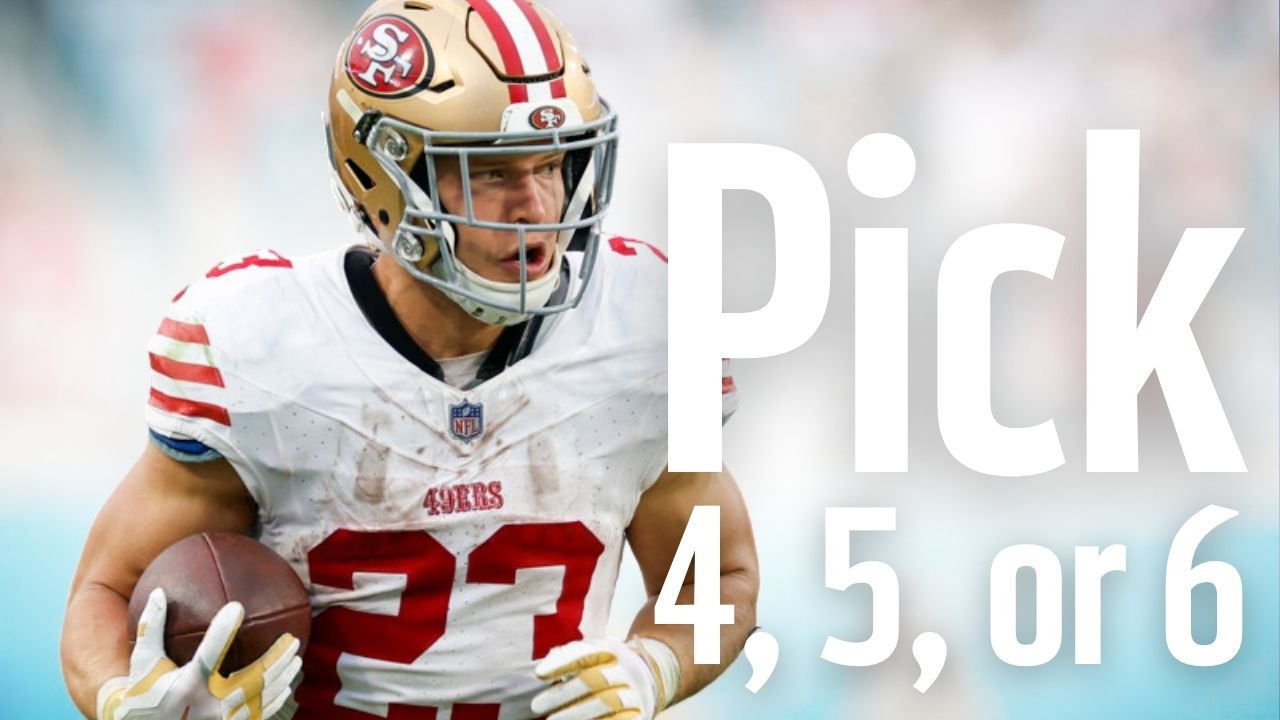
Puka Nacua, Jahmyr Gibbs, and Bijan Robinson are the top three players in our fantasy football rankings and ADP.
Assuming those three guys are off the board, you’ll find McCaffrey atop the Draft War Room rankings.
Age and injury history make him riskier than Gibbs and Robinson. But McCaffrey easily led both guys in expected and actual PPR points per game last year.
In fact, McCaffrey’s 24.4 points per game last year were the eighth-most by a RB over the last 10 seasons.
Barring injury, he’s set to play a similar role in 2026 and clearly has the upside to lead all RBs in fantasy points.
If you’re looking to go a little safer than McCaffrey in Round 1, Chase is an excellent pivot.
He led all WRs in pass routes and targets last year, despite missing a game. That speaks to Chase’s target-earning ability and Cincinnati’s consistently pass-heavy offense.
Injuries to QB Joe Burrow have limited Chase’s production in two of the last three seasons. But with a healthy Burrow in 2024, Chase exploded for 127 catches, 1,708 yards, and 17 TDs. His 23.7 PPR points per game that year were 0.2 more than Nacua averaged as fantasy’s top WR last year.
Walker-to-the-Chiefs almost seems to good to be true. We get an explosive runner who got paid to be a feature back in an offense led by HC Andy Reid and QB Patrick Mahomes.
Injury seems like the only thing that can get in the way here. Our projections land Walker ninth among RBs in the PPR rankings, making him a strong target here.
London ranked eighth among WRs in both expected and actual PPR points per game last year. He drew a 29.2% target share and has now topped 28% in three of four NFL seasons.
London projects for big volume again in 2026, making him a relatively safe bet for top-10 fantasy production regardless of who’s under center for Atlanta.
Rice is a risky pick here. He’s facing more off-field trouble this offseason after his ex-girlfriend accused him of assault. And his QB is working back from a torn ACL.
But Rice also has the potential to return a big profit at this price tag. In his eight games last season, he drew a 26.5% target share, ranked fourth among WRs in expected PPR points per game, and scored as the WR5 in actual points per game.
Brown’s name continues to surface in trade rumors, but leaving run-heavy Philadelphia could actually help his fantasy value.
Brown remained good last year, ranking 17th among 76 qualifying WRs in yards per route and 11th in PFF receiving grade.
3D Values identify exactly what a player is worth in YOUR league.
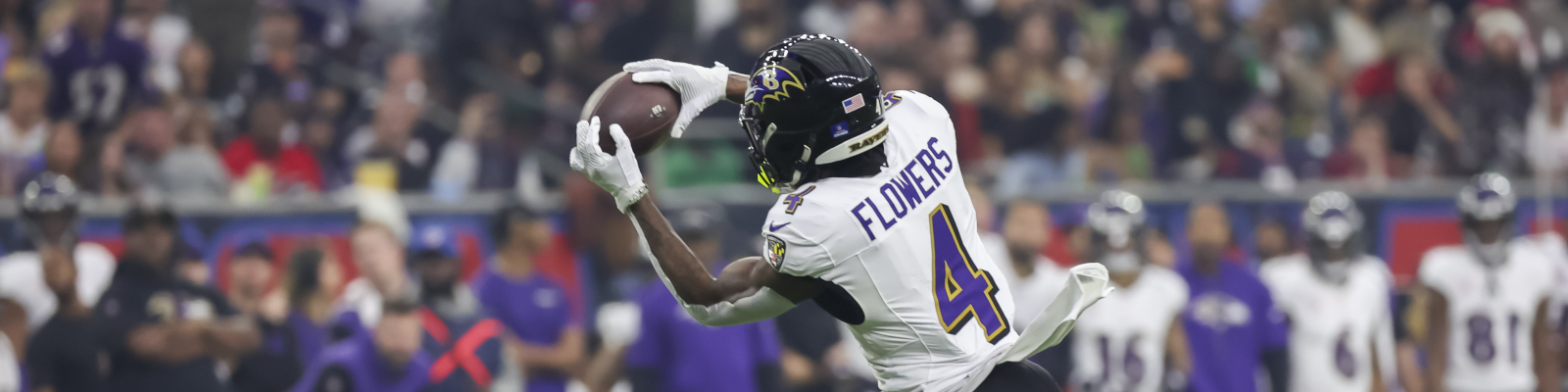
Flowers is coming off a career-best 14.5 PPR points per game, good for 13th among WRs. That was despite QB Lamar Jackson missing four games and parts of a few others.
There’s still more upside here. Flowers turns just 26 in September and has improved his target share, targets per route, and yards per route across each of his three NFL seasons.
Williams’ new three-year, $24 million deal with the Cowboys makes him a good bet to play a similar role as last year.
That role landed him seventh among RBs in expected PPR points per game and 12th in actual points per game.
Waddle averaged a strong 2.19 yards per route in an underwhelming Dolphins offense last year. He has now topped 2.0 yards per route in three of his last four seasons.
Waddle got a big boost up the WR rankings with his move to Denver, where he’ll get steady QB play from Bo Nix in an offense that finished fourth in pass attempts last year.
Swift finished 18th among RBs in expected PPR points per game and 15th in actual points per game last year. The Bears added nothing to the backfield in free agency and are unlikely to make a big investment into the position in the draft.
Expect Swift to play a similar role this season as the 1A ahead of Kyle Monangai, making him a relatively safe pick here.
This is a good spot to target a high-end QB, with Hurts leading the way.
Even in a down 2025, he ranked QB7 in fantasy points per game. That followed top-5 finishes in each of the previous three years.
Hurts remains a good bet for difference-making production, especially if you believe Philadelphia’s offense will bounce back this season. And he’s a couple of rounds cheaper than he was last year.
Warren’s 11.1 PPR points per game last year were 10th-most by a rookie TE in NFL history. He was even better in 12 games with QB Daniel Jones, averaging 13.1 PPR points.
Jones signed a new deal with Indianapolis this offseason and is tentatively expected to be ready for Week 1. A healthy season from Jones would make Warren a strong candidate for a Year 2 leap.
Metcalf is coming off a WR25 finish in PPR points per game on a 21.3% target share. He could maintain that type of share in 2026, despite the addition of WR Michael Pittman. And the Steelers could throw more under new HC Mike McCarthy, who has been a pass-leaning play caller.
Pittsburgh’s QB uncertainty adds risk. But that’s baked into this price tag on Metcalf.
Maye was spectacular last year, leading the league in both completion rate and yards per attempt. He finished third among QBs in fantasy points per game.
New England’s pass-catching corps remains underwhelming for now. But help could still be on the way in the draft or via trade (A.J. Brown).
TIP
Put this draft strategy to the test with the FREE Mock Draft Simulator.
Pittman has been a strong target earner, posting a 20+% target share in five straight seasons.
He has a good chance to make it six straight this year in Pittsburgh, where the Steelers have very little beyond D.K. Metcalf.
Note: If you drafted Metcalf earlier and are looking for a WR, consider Jordan Addison, Quentin Johnston instead of Pittman.
Injuries cost Purdy eight games last year, but he ranked fourth among QBs in points per game in the other nine. That followed a QB9 finish in 2024.
Swapping out WR Jauan Jennings for WR Mike Evans this offseason is a big upgrade.
Dobbins played ahead of RB RJ Harvey prior to his Week 10 foot injury last year, ranking 23rd among RBs in PPR points per game.
The two-year, $16 million contract he got in free agency all but guarantees that Dobbins will play a big role again in 2026.
The back injury that ended LaPorta’s 2025 season adds risk but also delivers a deep discount. This guy was a fifth- or sixth-round pick in most drafts last year.
LaPorta was producing just fine before going down last season, ranking seventh among TEs in PPR points per game. Assuming health, he’ll remain a big part of this high-scoring Lions offense.
Coleman is in the mix to be the second RB off the board in April’s draft and could wind up going multiple rounds earlier than this in fantasy drafts with a good landing spot.
At 220 pounds with more than 3,000 rushing yards and 87 receptions for his college career, Coleman has three-down upside.
Size, production, and pro-style experience make Jonah Coleman a rookie to know.
Murray needs to beat out QB J.J. McCarthy for the starting job in Minnesota. But if he does, he’ll boast obvious top-12 upside thanks to his rushing ability, HC Kevin O’Connell’s scheme, and the Vikings’ weaponry.
Murray is an ideal target if you’re waiting at QB.
This is a good spot for TE value, with varying degrees of upside and risk on Kittle, Travis Kelce, and Dalton Kincaid.
Kittle leads the group in ceiling after finishing third among TEs in PPR points per game across his 10 full outings last year. The Achilles injury obviously adds risk, but a 10th- or 11th-round cost makes Kittle relatively replaceable.
Higgins flashed nice efficiency last year, ranking top-5 among 15 qualifying rookie WRs in targets per route, yards per route, and PFF receiving grade.
There’s room for him to garner a lot more volume this season, making him a breakout candidate.
TIP
Higgins made our list of top 2026 fantasy football sleepers.
Washington has been a big pre-draft riser after clocking a 4.33-second 40 time at 223 pounds at the Combine. That earned him a 100th percentile speed score.
Washington has a chance to get Day 2 draft capital and win a healthy work share this season.
Will Downs finally get a chance at a full-time role with the departure of Michael Pittman Jr.? We’re not entirely convinced yet. But he’s certainly worth a shot at this point in your draft.
Downs would rock top-30 PPR upside as a full-timer.
Brooks sat out all of last season recovering from the second tear of his right ACL. But he’s seemingly on track to be a full-go for 2026. And his competition for touches in Carolina’s backfield is Chuba Hubbard, who’s coming off an underwhelming season.
Brooks is one of our favorite late-round targets at RB.
McMillan finds big opportunity in Tampa Bay after the departure of Mike Evans, who has averaged 1,088 yards and 9.0 TDs over the last 12 seasons.
McMillan was a good-looking prospect, scored eight TDs as a rookie, and then popped for a 114-yard game in Week 17 last year after missing most of the season with a neck injury.
Target a player with big upside in Round 14. You can sort by projected ceiling in your Draft War Room to find players with difference-making upside.
Some names to consider:
You’ll probably want to play matchups and stream at K and DST throughout the season. We’ll have the top options to target in drafts at both positions when we get the 2026 NFL schedule this spring.
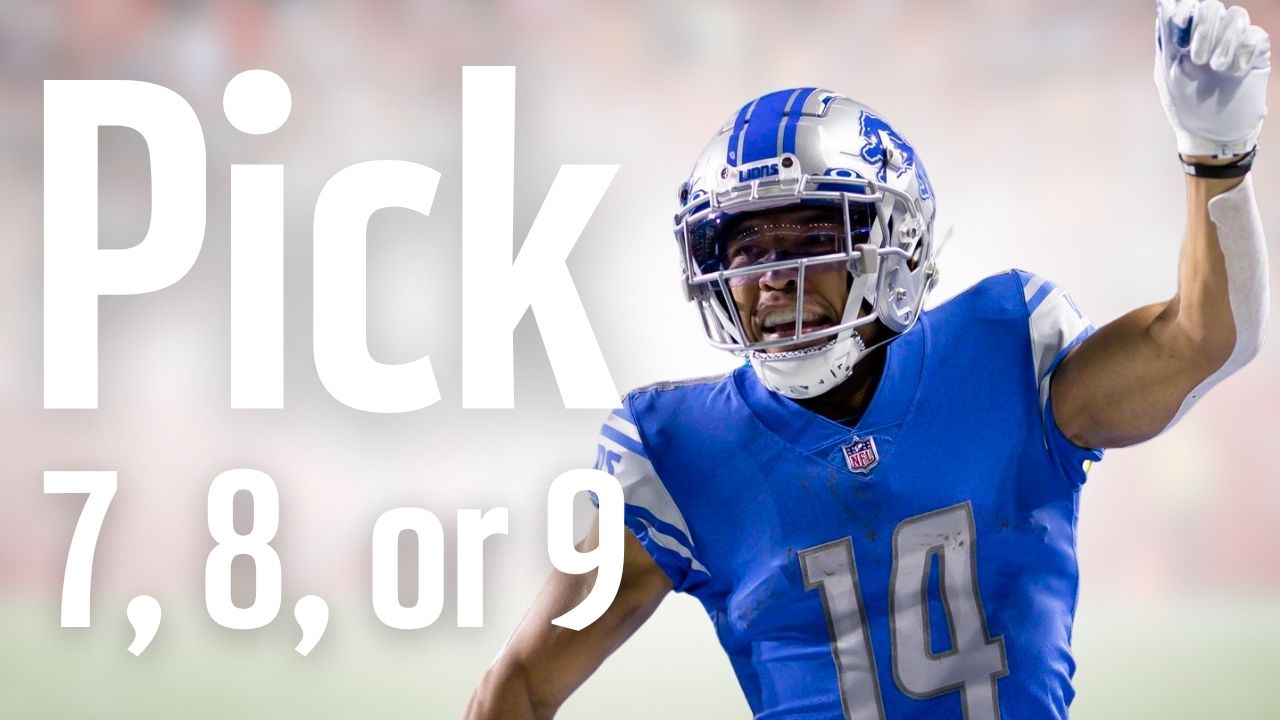
There’s some age and injury risk with McCaffrey. But he’s as good a bet as any to lead RBs in fantasy points per game.
McCaffrey did just that last year, handily beating Bijan Robinson and Jahmyr Gibbs. In fact, McCaffrey’s 24.4 points per game were the eighth-most by a RB over the last 10 seasons.
St. Brown is one of the safest picks in fantasy football. He has missed just one game over the past three seasons and finished third among WRs in total PPR points in all three.
St. Brown returns to a very similar situation with the Lions in 2026.
Barkley disappointed last year, finishing 15th among RBs in PPR points per game. He still ranked seventh at the position in expected points, though, and was generally held back by a sagging Eagles offense.
There’s bounce-back potential for the unit in 2026 with a new play caller. And remember that Barkley is just a season removed from leading all RBs with 22.0 PPR points per game.
London ranked eighth among WRs in both expected and actual PPR points per game last year. He drew a 29.2% target share and has now topped 28% in three of four NFL seasons.
London projects for big volume again in 2026, making him a relatively safe bet for top-10 fantasy production regardless of who’s under center for Atlanta.
Rice is a risky pick here. He’s facing more off-field trouble this offseason after his ex-girlfriend accused him of assault. And his QB is working back from a torn ACL.
But Rice also has the potential to return a big profit at this price tag. In his eight games last season, he drew a 26.5% target share, ranked fourth among WRs in expected PPR points per game, and scored as the WR5 in actual points per game.
Brown’s name continues to surface in trade rumors – but leaving run-heavy Philadelphia could actually help his fantasy value.
Brown remained good last year, ranking 17th among 76 qualifying WRs in yards per route and 11th in PFF receiving grade.
3D projections factor in ceiling and floor to give you a complete look at every player's fantasy value.
Flowers is coming off a career-best 14.5 PPR points per game, good for 13th among WRs. That was despite QB Lamar Jackson missing four games and parts of a few others.
There’s still more upside here. Flowers turns just 26 in September and has improved his target share, targets per route, and yards per route across each of his three NFL seasons.
Williams’ new three-year, $24 million deal with the Cowboys makes him a good bet to play a similar role as last year.
That role landed him seventh among RBs in expected PPR points per game and 12th in actual points per game.
Waddle averaged a strong 2.19 yards per route in an underwhelming Dolphins offense last year. He’s now topped 2.0 yards per route in three of his last four seasons.
Waddle got a big boost up the WR rankings with his move to Denver, where he’ll get steady QB play from Bo Nix in an offense that finished fourth in pass attempts last year.
Swift finished 18th among RBs in expected PPR points per game and 15th in actual points per game last year. The Bears added nothing to the backfield in free agency and are unlikely to make a big investment into the position in the draft.
Expect Swift to play a similar role this season as the 1A ahead of Kyle Monangai, making him a relatively safe pick here.
This is a good spot to target a high-end QB, with Hurts leading.
Even in a down 2025, he ranked QB7 in fantasy points per game. That followed top-5 finishes in each of the previous three years.
Hurts remains a good bet for difference-making production, especially if you believe Philadelphia’s offense will bounce back this season. And he’s a couple of rounds cheaper than he was last year.
Warren’s 11.1 PPR points per game last year were the 10th most by a rookie TE in NFL history. He was even better in 12 games with QB Daniel Jones, averaging 13.1 PPR points.
Jones signed a new deal with Indianapolis this offseason and is tentatively expected to be ready for Week 1. A healthy season from Jones would make Warren a strong candidate for a Year 2 leap.
Metcalf is coming off a WR25 finish in PPR points per game on a 21.3% target share. He could maintain that type of share in 2026, despite the addition of WR Michael Pittman. And the Steelers could throw more under new HC Mike McCarthy, who has been a pass-leaning play caller.
Pittsburgh’s QB uncertainty adds risk. But that’s baked into this price tag on Metcalf.
Maye was spectacular last year, leading the league in both completion rate and yards per attempt. He finished third among QBs in fantasy points per game.
New England’s pass-catching corps remains underwhelming for now. But help could still be on the way in the draft or via trade (A.J. Brown).
TIP
Looking for more ways to crush your fantasy league? Check out all of our Fantasy Football Tools.
Pittman has been a strong target earner, posting a 20+% target share in five straight seasons.
He has a good chance to make it six straight this year in Pittsburgh, where the Steelers have very little beyond D.K. Metcalf.
Note: If you drafted Metcalf earlier and are looking for a WR, consider Jordan Addison or Quentin Johnston instead of Pittman.
Injuries cost Purdy eight games last year, but he ranked fourth among QBs in points per game in the other nine. That followed a QB9 finish in 2024.
Swapping out WR Jauan Jennings for WR Mike Evans this offseason is a big upgrade.
Dobbins played ahead of RB RJ Harvey prior to his Week 10 foot injury last year, ranking 23rd among RBs in PPR points per game.
The two-year, $16 million contract he got in free agency all but guarantees that Dobbins will play a big role again in 2026.
The back injury that ended LaPorta’s 2025 season adds risk but also delivers a deep discount. This guy was a fifth- or sixth-round pick in most drafts last year.
LaPorta was producing just fine before going down last season, ranking seventh among TEs in PPR points per game. Assuming health, he’ll remain a big part of this high-scoring Lions offense.
Coleman is in the mix to be the second RB off the board in April’s draft and could wind up going multiple rounds earlier than this in fantasy drafts with a good landing spot.
At 220 pounds with over 3,000 rushing yards and 87 receptions for his college career, Coleman has three-down upside.
Murray needs to beat out QB J.J. McCarthy for the starting job in Minnesota. But if he does, he’ll boast obvious top-12 upside thanks to his rushing ability, HC Kevin O’Connell’s scheme, and the Vikings’ weaponry.
Murray is an ideal target if you’re waiting at QB.
This is a good spot for TE value, with varying degrees of upside and risk on Kittle, Travis Kelce, and Dalton Kincaid.
Kittle leads the group in ceiling after finishing third among TEs in PPR points per game across his 10 full outings last year. The Achilles injury obviously adds risk, but a 10th- or 11th-round cost makes Kittle relatively replaceable.
Higgins flashed nice efficiency last year, ranking top-5 among 15 qualifying rookie WRs in targets per route, yards per route, and PFF receiving grade.
There’s room for him to garner a lot more volume this season, giving him exciting upside.
TIP
Pinpoint potential league winners with "Upside Mode" in your Draft War Room.
Washington has been a big pre-draft riser after clocking a 4.33-second 40 time at 223 pounds at the Combine. That earned him a 100th-percentile speed score.
Washington has a chance to get Day 2 draft capital and win a healthy work share this season.
Will Downs finally get a chance at a full-time role with the departure of Michael Pittman Jr.? We’re not entirely convinced yet. But he’s certainly worth a shot at this point in your draft.
Downs would rock top-30 PPR upside as a full-timer.
Brooks sat out all of last season recovering from the second tear of his right ACL. But he’s seemingly on track to be a full-go for 2026. And his competition for touches in Carolina’s backfield is Chuba Hubbard, who’s coming off an underwhelming season.
Brooks is one of our favorite late-round targets at RB.
McMillan finds big opportunity in Tampa Bay after the departure of Mike Evans, who has averaged 1,088 yards and 9.0 TDs over the last 12 seasons.
McMillan was a good-looking prospect, scored eight TDs as a rookie, and then popped for a 114-yard game in Week 17 last year after missing most of the season with a neck injury.
Target a player with big upside in Round 14. You can sort by projected ceiling in your Draft War Room to find players with difference-making upside.
Some names to consider:
You’ll probably want to play matchups and stream at K and DST throughout the season. We’ll have the top options to target in drafts at both positions when we get the 2026 NFL schedule this spring.
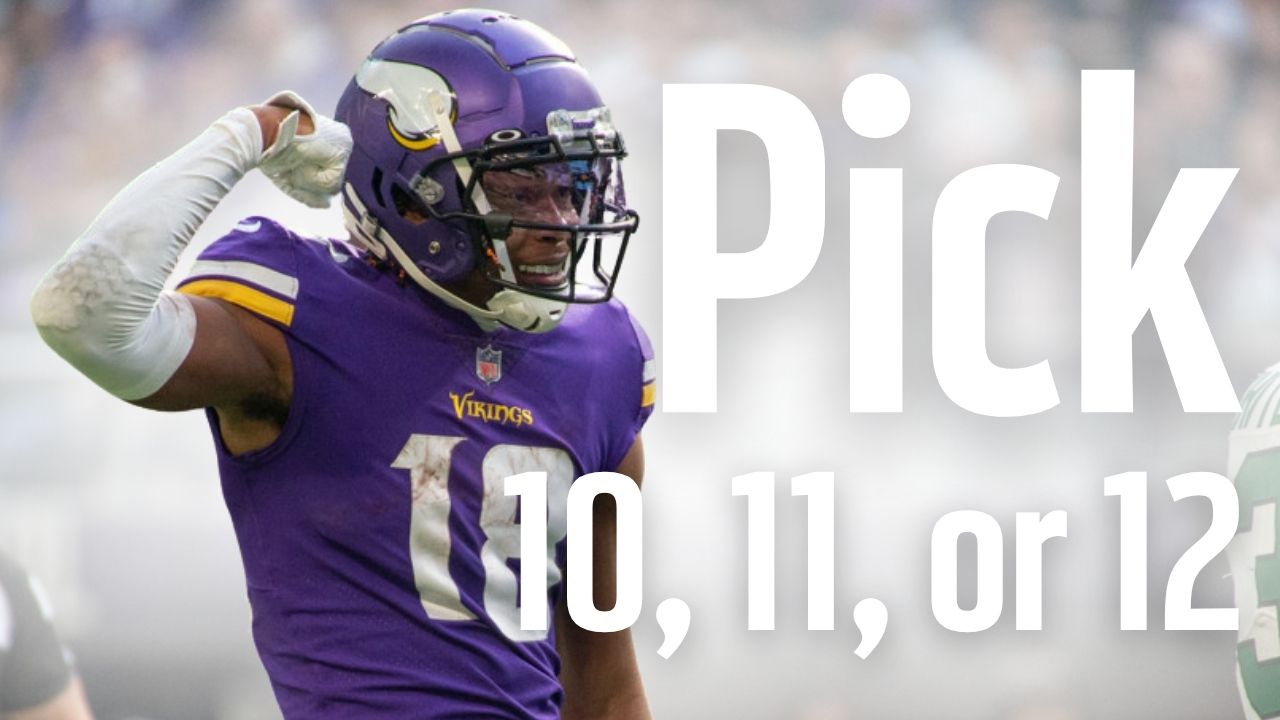
Jefferson was one of the biggest underachievers at WR last year. He ranked ninth in expected PPR points per game but finished just 30th in actual scoring.
The culprit: Minnesota’s QB play.
That should improve in 2026 -- whether it’s J.J. McCarthy or Kyler Murray -- making Jefferson a strong bounce-back candidate.
Cook is coming off his second straight top-8 PPR finish. His 2024 felt fluky, fueled by a huge TD rate. But 2025 was much more repeatable. Cook averaged 19.2 carries per game and ranked seventh among RBs in expected PPR points per game through Week 17.
Expect him to play a similar role in 2026.
Jeanty was stuck in a dreadful Raiders offense last season, leading to a RB15 finish in PPR points per game.
He dominated work, though, accounting for 72% of Vegas’ carries and 14% of the targets. That level of volume gives him an exciting ceiling in 2026 in what should be a much-improved offense under HC Klint Kubiak and QB Fernando Mendoza.
London ranked eighth among WRs in both expected and actual PPR points per game last year. He drew a 29.2% target share and has now topped 28% in three of four NFL seasons.
London projects for big volume again in 2026, making him a relatively safe bet for top-10 fantasy production regardless of who’s under center for Atlanta.
Rice is a risky pick here. He’s facing more off-field trouble this offseason after his ex-girlfriend accused him of assault. And his QB is working back from a torn ACL.
But Rice also has the potential to return a big profit at this price tag. In his eight games last season, he drew a 26.5% target share, ranked fourth among WRs in expected PPR points per game, and scored as the WR5 in actual points per game.
Flowers is coming off a career-best 14.5 PPR points per game, good for 13th among WRs. That was despite QB Lamar Jackson missing four games and parts of a few others.
There’s still more upside here. Flowers turns just 26 in September and has improved his target share, targets per route, and yards per route across each of his three NFL seasons.
Williams’ new three-year, $24 million deal with the Cowboys makes him a good bet to play a similar role as last year.
That role landed him seventh among RBs in expected PPR points per game and 12th in actual points per game.
Higgins is coming off a WR13 finish in PPR points per game, despite QB Joe Burrow missing nine games. Higgins ranked fifth at his position with a healthy Burrow in 2024.
He’ll continue to be a key part of Cincinnati’s pass-heavy offense in 2026.
Swift finished 18th among RBs in expected PPR points per game and 15th in actual points per game last year. The Bears added nothing to the backfield in free agency and are unlikely to make a big investment into the position in the draft.
Expect Swift to play a similar role this season as the 1A ahead of Kyle Monangai, making him a relatively safe pick here.
Warren’s 11.1 PPR points per game last year were the 10th most by a rookie TE in NFL history. He was even better in 12 games with QB Daniel Jones, averaging 13.1 PPR points.
Jones signed a new deal with Indianapolis this offseason and is tentatively expected to be ready for Week 1. A healthy season from Jones would make Warren a strong candidate for a Year 2 leap.
This is a good spot to target a high-end QB, with Hurts leading.
Even in a down 2025, he ranked QB7 in fantasy points per game. That followed top-5 finishes in each of the previous three years.
Hurts remains a good bet for difference-making production, especially if you believe Philadelphia’s offense will bounce back this season. And he’s a couple of rounds cheaper than he was last year.
Jalen Hurts' 428-point ceiling projection ranks fourth highest among QBs.
Watson ranked 19th among WRs in PPR points per game last year, registering career bests in yards per route and PFF receiving grade.
He finds additional target upside in 2026 with Romeo Doubs off to New England.
Metcalf is coming off a WR25 finish in PPR points per game on a 21.3% target share. He could maintain that type of share in 2026, despite the addition of WR Michael Pittman Jr. And the Steelers could throw more under new HC Mike McCarthy, who has been a pass-leaning play caller.
Pittsburgh’s QB uncertainty adds risk. But that’s baked into this price tag on Metcalf.
We’ll see exactly how Pittsburgh’s backfield shakes out with Kenneth Gainwell out and Rico Dowdle in. But that change could mean even more pass-catching work for Warren, who has averaged 46.3 catches over the last three seasons.
This is a fine spot to target your QB1 or TE1.
Lawrence is coming off a QB6 finish while leading the position in expected fantasy points per game. He was even better over the second half of the season (QB1) as he settled into HC Liam Coen’s scheme.
Lawrence’s combination of passing and rushing upside gives him an exciting fantasy ceiling.
Fannin just scored the fourth-most PPR points per game by a rookie TE since 2000. All while playing on a crappy Browns offense.
That offense remains a concern heading into 2026. But Fannin is a talent worth betting on.
Dobbins played ahead of RB RJ Harvey prior to his Week 10 foot injury last year, ranking 23rd among RBs in PPR points per game.
The two-year, $16 million contract he got in free agency all but guarantees that Dobbins will play a big role again in 2026.
Murray needs to beat out QB J.J. McCarthy for the starting job in Minnesota. But if he does, he’ll boast obvious top-12 upside thanks to his rushing ability, HC Kevin O’Connell’s scheme, and the Vikings’ weaponry.
Murray is an ideal target if you’re waiting at QB.
The back injury that ended LaPorta’s 2025 season adds risk but also delivers a deep discount. This guy was a fifth- or sixth-round pick in most drafts last year.
LaPorta was producing just fine before going down last season, ranking seventh among TEs in PPR points per game. Assuming health, he’ll remain a big part of this high-scoring Lions offense.
Coleman is in the mix to be the second RB off the board in April’s draft and could wind up going multiple rounds earlier than this in fantasy drafts with a good landing spot.
At 220 pounds with over 3,000 rushing yards and 87 receptions for his college career, Coleman has three-down upside.
TIP
Get dynamic rankings every time you're on the clock with live-draft sync.
This is a good spot for TE value, with varying degrees of upside and risk on Kittle, Travis Kelce, and Dalton Kincaid.
Kittle clearly leads the group in ceiling after finishing third among TEs in PPR points per game across his 10 full outings last year. The Achilles injury obviously adds risk, but a 10th- or 11th-round cost makes Kittle relatively replaceable.
Higgins flashed nice efficiency last year, ranking top five among 15 qualifying rookie WRs in targets per route, yards per route, and Pro Football Focus receiving grade.
There’s room for him to garner a lot more volume this season, making him one of our favorite 2026 fantasy football sleepers.
Washington has been a big pre-draft riser after clocking a 4.33-second 40 time at 223 pounds at the Combine. That earned him a 100th percentile speed score.
Washington has a chance to get Day 2 draft capital and win a healthy work share this season.
Will Downs finally get a chance at a full-time role with the departure of Michael Pittman Jr.? We’re not entirely convinced yet. But he’s certainly worth a shot at this point in your draft.
Downs would rock top-30 PPR upside as a full-timer.
Brooks sat out all of last season recovering from the second tear of his right ACL. But he’s seemingly on track to be a full-go for 2026. And his competition for touches in Carolina’s backfield is Chuba Hubbard, who’s coming off an underwhelming season.
Brooks is one of our favorite late-round targets at RB.
McMillan finds big opportunity in Tampa Bay after the departure of Mike Evans, who has averaged 1,088 yards and 9.0 TDs over the last 12 seasons.
McMillan was a good-looking prospect, scored eight TDs as a rookie, and then popped for a 114-yard game in Week 17 last year after missing most of the season with a neck injury.
Target a player with big upside in Round 14. You can sort by projected ceiling in your Draft War Room to find players with difference-making upside.
Some names to consider:
You’ll probably want to play matchups and stream at K and DST throughout the season. We’ll have the top options to target in drafts at both positions when we get the 2026 NFL schedule this spring.
Having round-by-round strategy heading into your draft is important.
But fantasy football drafts are unpredictable. You need to be nimble. You need to adjust on the fly to capture the most value.
The Draft War Room takes our award-winning player projections and tailors them to your league’s scoring and lineup settings, delivering a precise set of rankings just for you.
Then it recalibrates throughout your draft based on 17 value indicators to make sure you’re making the absolute best pick each time you’re on the clock.
FIRE UP YOUR DRAFT WAR ROOM NOW!
Puka Nacua is the number one fantasy pick in 2025. He scored over 2 PPR points per game more than any other WR last year and returns to a similar situation this season.
You can draft a WR or RB first in a PPR league. Puka Nacua sits atop the Draft Sharks rankings. But Jahmyr Gibbs and Bijan Robinson are close behind. All three are viable first picks in PPR.
Our research found that the best draft position in 2026 depends on your scoring system. You want to pick 5th or 6th in PPR leagues, 1st in half-PPR, and at the end of Round 1 in non-PPR.
You should typically draft 5, 6 or 7 RBs and WRs in traditional formats with a 16-round draft. That can (and should) change depending on your scoring rules and starting lineup requirements.
Try to be one of the first or last teams to take a QB in your draft. Elite QBs like Lamar Jackson and Jalen Hurts are worth their price. But you can also find strong values late, such as Kyler Murray and Tyler Shough.
You should commonly draft a kicker or defense in the very late rounds in fantasy. Sometimes it might even be a good idea to pick up kickers and defenses on the waiver wire and stream them.

1. Use Unique Rankings To Give Yourself an Edge
Many of your competitors will be drafting off of the same rankings (think: ESPN or Yahoo). Tough to get an edge that way. Put in the work. Stay up-to-date on the news. And don’t be afraid to break away from the herd when it comes to your rankings. It’s an easy way to out-draft your competition.
2. Weaponize ADP To Outsmart Your Competition
ADP is like having your opponent’s playbook. Whether subconsciously or not, ADP has a huge influence on draft behavior. Drafters rarely stray too far from it. Knowing which players your opponents are likely (and unlikely) to draft next can give you a big strategic advantage. (Hint: Use our ADP Market Index to help.)
3. Catch League-Winning Breakout Candidates
Leagues are won by nailing one or two breakout late-round picks. Think Drake Maye or Harold Fannin last year. When you’re on the clock and deciding between two or more players, always ask yourself: “Which of these guys is more likely to be the league-winning, had-to-have player?” Then take that guy.
4. Learn to Predict Your Opponents’ Picks
Drafting is part science (rankings, ADP, positional value) and part art. No two drafts will play out same. It’s your job to recognize the flow of your draft and react accordingly. It’s especially important to track positional needs. For example, if teams near you have selected a bunch of WRs but few RBs, you can assume they’ll be targeting RBs soon. Get out ahead of them and snag a RB with your next pick.
5. Discover the Next Rico Dowdle
Let your league mates waste later-round picks on handcuffing their own RBs. You can get the jump on them by targeting RBs behind fragile starters. That was Rico Dowdle and Woody Marks this time last year. And we’re eyeing some intriguing new candidates for 2026.
6. Draft Immobile QBs in 2026 (Wait … What?!)
Running QBs are fantasy gold. Problem is, that’s no longer a secret. In many cases, the pendulum has swung too far toward those guys. And that’s turned some less-mobile QBs into values. Matt Stafford was a prime example last year. Heading into 2026, Trevor Lawrence and Brock Purdy pop as undervalued QBs -- despite not being elite runners.
7. Chase opportunity at RB… and talent at WR
Fantasy scoring at RB is closely tied to playing time and touches. Target RBs who project to get the rock a lot. WR is a more talent-driven position. Targets are earned, not given. That’s why advanced metrics like targets per route and yards per route run should be key factors in your WR rankings.
1. Don't Match Your Rankings To Last Year’s Stats (Consider What's Changed)
Overweighing last year's fantasy finishes could cost you on draft day. Too much changes from year to year. That includes coaching staffs, offensive schemes, rookies, free agents, etc. That’s why it’s crucial that you live in the present and weigh all the offseason changes when creating your 2026 player rankings.
2. Don’t Be Stubborn About Your Pre-Draft Plan
Instead, be flexible. You might go in with a Zero-RB strategy. But if enough teams grab WRs by the second round, a workhorse RB might fall into your lap. That’s when it’s time to scoop up the player who will best help your team win … not reach for a position because it was part of your pre-draft plan.
3. Don’t Pass Up Player Value to Chase Positional ‘Need’
NFL teams that try to fill “needs” (instead of going “best player available”) most often crap out on their draft picks. Same holds true for you. Reaching for a “need” player most often blows your chances at winning. And remember: Drafting the best player available gives you a valuable trade chip down the road.
The most advanced fantasy football draft strategy for any format, and any league, is a “Value Based Draft Strategy.” It can take different forms, and be based on any number of draft-value indicators.
Draft Sharks' value-based draft strategy actually has 17 Draft Value Indicators. Here are 7 crucial ones you can use in your draft:
1. Master Cross Positional Value
Which positions are most valuable in your league? It's QB in superflex ... but not in 1-QB leagues. How do RBs stack up vs. WRs in PPR vs. half-PPR? Understanding values across positions involves using a specific algorithm to analyze player values. It weighs various factors like scoring rules, starting-lineup requirements, ADP, and league settings.
2. Track Positional Scarcity on the Fly
This one is super important but also super hard. To measure positional scarcity, you need to track each pick -- and calculate how it impacts the player pool. If there are seven QBs taken by the fifth round, that position becomes scarce. And QBs suddenly increase in value in your draft.
3. Prioritize Players With Greater Upside
You’re in the 11th round and torn between three players with roughly the same draft value. You need to highlight the player with the highest fantasy ceiling. Then make sure he doesn't slip by you in the heat of the draft. It might sound simple, but it’s mission-critical to identify these breakout players and pull the trigger when the time is right.
4. Look Out for “Bust” Red Flags
You probably know the red flags of a potential bust. But are you factoring them into your value of each player? Age, declining production, bad offensive line, competition for touches, a new offensive scheme that de-emphasizes a player’s role. Don’t blow your draft capital on a player who is screaming “bust!”
5. Get Scientific Injury Risk Assessments
You know the scenario… You spend a second-round pick on a stud WR -- and in Week 2, he suffers a soft-tissue injury and misses the next four weeks. Brutal. Injuries aren’t 100% predictable. But you can get reliable scientific data to avoid the biggest potential injury risk players.
6. Use Correlated ADP
This one is huge. Using ADP (Average Draft Position) is the ultimate measure to find value. The problem is this: If you use redraft PPR ADP to prepare for your half-PPR best ball league, you’re doing yourself more harm than good. Find reliable ADP that is correlated to your specific rules and format.
7. Avoid Bye-Week Conflicts
You’d think this one would be so easy. But you know the truth. You’re in the heat of your draft, you’re on the clock, and bang … you double-up on the same bye week at a crucial position. You’re now forced to fix that mistake at some point in your draft – or later in your season.
Key Insight: There are a lot of factors that go into drafting for true player value. It’s not just about using “position tiers” or employing a “Zero” or “Hero” RB strategy. It’s about using a mix of scientific metrics and educated guesses in predicting player production. And how you and your opponents behave during critical times in your draft.
How To Execute This Strategy: You’ve got a lot to focus on if you want to execute these draft strategies in real-time – amid the chaos of your draft. In fact, it’s humanly impossible for anyone to implement every key strategy… AND work out every algorithm essential to a winning draft.
The real solution is to get real-time help from an AI “Draft War Room.”
If what you’ve read so far makes sense, here’s a draft tool you need to learn more about.
It’s actually TWO tools that pair together so you can dominate your draft with one super tool!
A live-draft sync super-powered by the “Draft War Room” (DWR)
This super draft tool automatically re-ranks players on your draft board in real-time. Those dynamic player values are based on a variety of factors, including positional scarcity, team needs, injury risk, breakout potential, and bust risk. In fact, there are 17 draft-value indicators it calculates in real-time to come up with your player suggestions.
How It Works: You're just a few clicks away from your league and draft being live-synced. From there, you’re on the road to draft domination. And it works across multiple platforms (ESPN, Yahoo, CBS, Underdog, and Sleeper, to name a few). For multiple league formats (dynasty, rookie, keeper, best ball, auction, superflex – and, of course, redraft).
What It Means For You: You get dynamic player values customized to your league. Simply. And in real-time. When it's your turn to pick, the Draft War Room offers instant player suggestions tailored to everything happening in your draft. You’ll be unburdened from the pressure of being "on the clock." While at the same time getting specific player suggestions that are scientifically based and strategically sound.
Key Insights: If you're serious about winning your fantasy league, you can’t rely on 2016 tools in 2026. It’s really that simple. We know too much about the science behind successful drafting to keep basing decisions on “gut” and “educated guesses.” And we need to have a lot more technology at our disposal to be consistent fantasy football champions.
How to Execute This Strategy: Make sure you pick a “live-draft sync” over a simple “league sync.” A league sync doesn't work during your draft to adjust player values in real-time. To learn more about the live-draft sync option, check out this page explaining our live-sync tool.

Draft using the best dynamic tool in the industry. Our fantasy player valuations (3D Values) change during your draft in response to...
You need a dynamic cheat sheet that easily live-syncs with your draft board and adapts throughout your draft using 17 crucial indicators.
Get your Draft War Room Today You have our personal money-back guarantee: If you’re not happy with our service for any reason, just reach out by December 31, 2026, and we’ll give you 100% of this purchase back. No strings attached. You can cancel with one-click from your account page anytime.












 Search
 Redraft
 Dynasty
 Best Ball